

In short. MSOs are often associated with medical practices, but the operating model may also support closely held businesses, professional firms, estate planning, succession, insurance funding, and exit preparation. The structure is most effective when integrated with the owner's legal, tax, accounting, insurance, wealth, and operating advisors.
Advanced-planning advisors know what a management services organization is. Most have encountered one. Almost all of them encountered it in medicine.
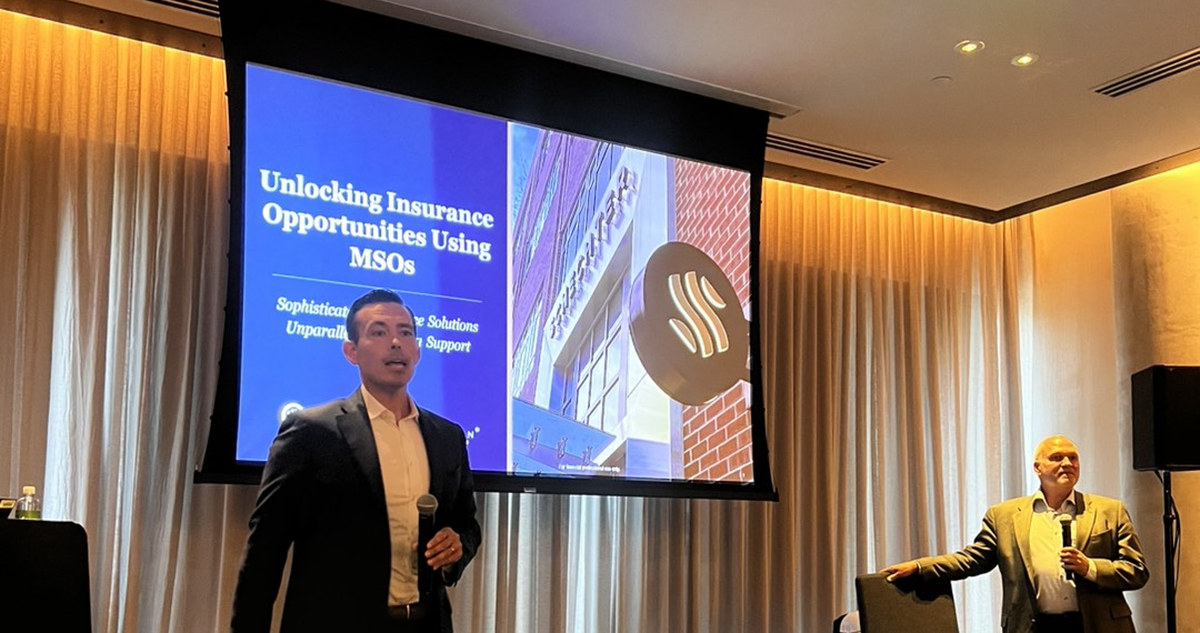
That was the starting point for “Unlocking Insurance Opportunities Using MSOs,” a session presented at the Penn Mutual Life Sales Summit with Jordan Smith, JD, LL.M. It was not where the room ended up. The questions moved quickly from the healthcare model toward closely held businesses, professional-services firms, succession, estate liquidity, insurance funding, and what an owner does with capital that has not yet been taxed at personal rates.
What follows is what the room asked, and what those questions suggest about where advisor understanding currently sits.
Why advisors commonly associate MSOs with healthcare
The association is historically accurate. The management services organization took its modern form in medicine, where corporate-practice-of-medicine doctrine prevents non-licensed parties from owning a clinical practice. The MSO emerged as the answer to a specific regulatory problem: how does capital participate in the economics of a practice it cannot legally own?
That origin gave the structure a strong industry association, and a durable one. Most advisors first meet an MSO in a dental rollup, a physician group, or a veterinary platform.
The distinction worth drawing is between the industry-specific healthcare model, built to satisfy a licensure constraint, and the general operating model underneath it: a separate company that centralizes real services, real personnel, real infrastructure, and real administrative functions, and is compensated for them.
The licensure problem is specific to regulated professions. The operating model is not.
Where the MSO model may apply beyond medicine
This is where most of the room's questions landed. The recurring pattern was an advisor describing a client — a closely held manufacturer, a professional firm, a family real estate holding, an owner five years from transition — and asking whether the structure had anything to say about that situation.
The honest answer is that it depends on whether there are genuine services to centralize. Where an owner operates multiple entities, employs shared administrative and management personnel, carries infrastructure used across business lines, or has grown past the point where one entity sensibly holds everything, there is usually something real for a management company to do.
Applications that came up directly: succession and buy-sell funding, estate liquidity, insurance funding, real estate holdings, reinvestment capital, and transaction preparation.
The disqualifier is equally clear. Where there are no real services, no personnel, and no infrastructure to centralize, there is no management company. There is a fee. That distinction is the whole of it.
How an MSO can fit into exit planning
A theme worth separating from the others, because it is frequently misunderstood in both directions.
An MSO may support the work an owner has to do before a transition regardless of whether a transition ever happens: institutional readiness, management infrastructure that does not depend on the founder, improved reporting, documented governance, funded succession mechanics, and estate liquidity. Buyers underwrite these things, but so do lenders, and so does the family of an owner who dies without a plan.
The structure should not be built on the assumption of a sale. An MSO whose economics only work at exit is a bet, not a structure. The version that holds is the one an owner would want if they never sold, and which happens to read well to a buyer because operating discipline reads well to everyone. Exit pathways are a consequence of building it properly, not the reason to build it.
Tax deferral versus permanent tax savings
This distinction produced more questions than any other topic, and it is worth stating precisely.
The immediate economic result of moving profit from a pass-through rate to a corporate rate is deferral. Tax is not eliminated; its timing and its rate change. Under appropriate facts and planning conditions, some portion of the result may become permanent. Neither outcome is automatic and neither should be assumed before analysis.
What the result actually depends on: the owner's facts, entity classification, applicable rates, timing, ownership, use of funds, economic substance, the service activity actually performed, pricing, documentation, and continuing administration.
An advisor who presents an MSO as producing tax savings has skipped every one of those variables. An advisor who presents it as producing nothing but deferral has skipped the planning that determines the rest.
Deduction in one entity, income in another
A properly structured service arrangement may produce a deductible business expense in the operating entity and corresponding income in the management company. That is the mechanism, and stating it plainly is more useful than talking around it.
It is also the sentence that has to carry its conditions with it. The deduction depends on legitimate business activity actually performed, supportable pricing tested against an arm's-length standard, compliance with related-party rules, contemporaneous documentation, and operating substance maintained over time rather than assembled at formation.
Every one of those is a live obligation, not a formation step.
Why after-tax capital matters
One of the figures walked through in the session was the arithmetic behind that capital, and it is straightforward. A dollar of profit taxed at a 37% pass-through rate leaves roughly 63 cents. The same dollar taxed at the 21% corporate rate inside a management company leaves roughly 79 cents, approximately 25% more capital available for deployment at that stage. That differential is a function of the rate spread, not a result any particular engagement produces, and the capital sits inside the MSO before any second layer of tax on distribution.
That last clause matters, and the double-tax question deserves its own analysis. Capital inside a C corporation is not capital in the owner's pocket. Planning for how it is deployed, and eventually how it leaves, is part of the design rather than an afterthought.
Where that capital may go: policy cash value and death benefit funding, business reinvestment, real estate, liquidity reserves, succession funding, or other documented business purposes. How the cash is used, and documented, is itself a technical question. Accumulated earnings considerations do not disappear because the capital is doing something useful.
How MSOs may intersect with estate planning
For this audience, the most immediately relevant thread.
Because the federal gift and estate tax rate can reach 40%, the ownership and timing of future value creation materially affects the economics of an estate plan. A business that will be worth substantially more in ten years presents a very different transfer-tax problem depending on who owns the growth and when that ownership was established.
Guardian's published case studies illustrate how coordinated business and estate planning may reduce the value ultimately exposed to transfer tax under the documented facts. The case of an owner who has already exhausted the exemption is the clearest worked example.
An MSO does not eliminate gift or estate tax. What coordinated ownership design may do is change how much future enterprise value is exposed to it, and that is a planning question involving counsel, not a feature of the structure.
Why the structure cannot operate in isolation
The most useful conclusion from the session, and the one the questions kept returning to.
An MSO touches the operating business, the tax return, the estate plan, the insurance portfolio, the balance sheet, and the banking relationship simultaneously. No single advisor owns all of that. The structure works when the CPA, tax counsel, estate-planning counsel, corporate counsel, the insurance advisor, the wealth advisor, the transfer-pricing economist, valuation professionals, the lender, and the owner's operating team are working from the same design, and it fails, predictably, when one of them builds it alone.
Guardian's role is to design and administer the operating and economic architecture and coordinate it with the professionals a client already has. Independent legal review sits outside that role deliberately. An advisor evaluating any MSO proposal should ask who is holding the seams, because in a point-in-time engagement, frequently no one is.
Questions advisors should ask before recommending an MSO
- What legitimate services will the MSO actually perform?
- Which employees, systems, and functions belong inside it?
- How will the management fee be established, and by whom?
- What documentation supports the related-party arrangement?
- How does the MSO fit the owner's existing estate plan?
- How will after-tax capital be used, and how is that documented?
- What happens if the business is never sold?
- Who is responsible for recurring administration, and in what cadence?
- How will the CPA, attorneys, insurance advisor, and wealth advisor coordinate?
- What risks and assumptions have to be monitored annually?
An advisor who can answer all ten has a structure. An advisor who can answer three has a diagram.
What the questions at the Life Sales Summit revealed

The discussion continued beyond the scheduled session, with advisors asking how the structure could fit within existing business, insurance, estate, and wealth-planning relationships.
The volume of questions suggested something specific about where this market is. The room was not asking what an MSO is. It was asking when one fits, which is a materially more advanced question, and a harder one to answer well.
That shift, from definition to application, is the thing worth noting. It suggests advisors are past the point of needing the concept explained and into the point of needing judgment about suitability. That is a better conversation, and it is the one the profession should be having.
An MSO is an operating structure. It is not a tax product, an insurance strategy, or a standalone planning tactic, and it does not survive being treated as any of those. Its value comes from being run as a real business, coordinated with the advisors already serving the owner, and administered continuously rather than assembled once.
Advisors evaluating one should start where this room ended up: not with whether the structure works, but with whether it fits.
Frequently asked
Are MSOs only used by medical practices?
No. The model originated in healthcare because of corporate-practice-of-medicine restrictions, but the underlying structure, a company that centralizes real services, personnel, and infrastructure for affiliated operating entities, is not industry-specific. Its suitability depends on whether genuine services exist to centralize.
Can an MSO be used by a closely held business?
It may, where there are legitimate management, administrative, or shared-service functions to consolidate and the arrangement can be supported with arm's-length pricing and contemporaneous documentation. Facts govern.
How can an MSO support exit planning?
By supporting work an owner benefits from regardless of a sale: institutional readiness, management infrastructure independent of the founder, improved reporting, documented governance, funded succession mechanics, and estate liquidity. A structure whose economics depend on a sale occurring is not a durable structure.
Does an MSO create tax savings or tax deferral?
The immediate result of moving profit from a pass-through rate to a corporate rate is deferral. Under appropriate facts and planning conditions some portion may become permanent. Neither is automatic, and the outcome depends on facts, structure, timing, use of funds, substance, documentation, and continuing administration.
How can an MSO affect after-tax cash flow?
A dollar taxed at 37% leaves roughly 63 cents; the same dollar taxed at 21% leaves roughly 79 cents, approximately 25% more capital available for deployment at that stage. That arithmetic was part of the session material. That reflects the rate differential rather than any particular engagement result, and the capital sits inside the corporation before any second layer of tax on distribution.
How can an MSO fit into estate planning?
Because the federal gift and estate rate can reach 40%, who owns future enterprise value and when that ownership was established materially affects transfer-tax exposure. Coordinated ownership design may reduce the value ultimately exposed. This is a planning question requiring estate counsel, not a feature of the structure.
Can an MSO help fund life insurance or real estate?
Capital retained in the management company may be deployed to documented business purposes, which in appropriate circumstances can include insurance funding or real estate. Deployment decisions carry their own tax considerations, including accumulated earnings analysis.
Which advisors should be involved in an MSO?
At minimum the CPA, tax counsel, estate-planning counsel, corporate counsel, the insurance advisor, and the wealth advisor, with transfer-pricing and valuation professionals and the lender as facts require. The structure spans all of their domains.
Does a business need to be preparing for a sale to use an MSO?
No, and building one on that assumption is a common error. The structure should stand on operating logic that holds whether or not a transaction occurs.
What makes an MSO defensible?
Real services actually performed, real personnel and infrastructure, supportable arm's-length pricing, contemporaneous documentation created when the facts occur, and continuing administration. Defensibility is administered over time, not established at formation.

Presented at the Penn Mutual Life Sales Summit with Jordan Smith, JD, LL.M. Field observations are recorded generically; no attendee, firm, or client facts appear in this note.
Informational only. Applicability depends on the specific facts, structure, and advisory environment of each engagement. This material does not constitute legal, tax, or investment advice. Guardian Tax Consultants® does not provide legal or tax advice. All MSO structures are implemented in coordination with the client's independent legal and tax advisors. All illustrative examples are hypothetical and for educational purposes only.