
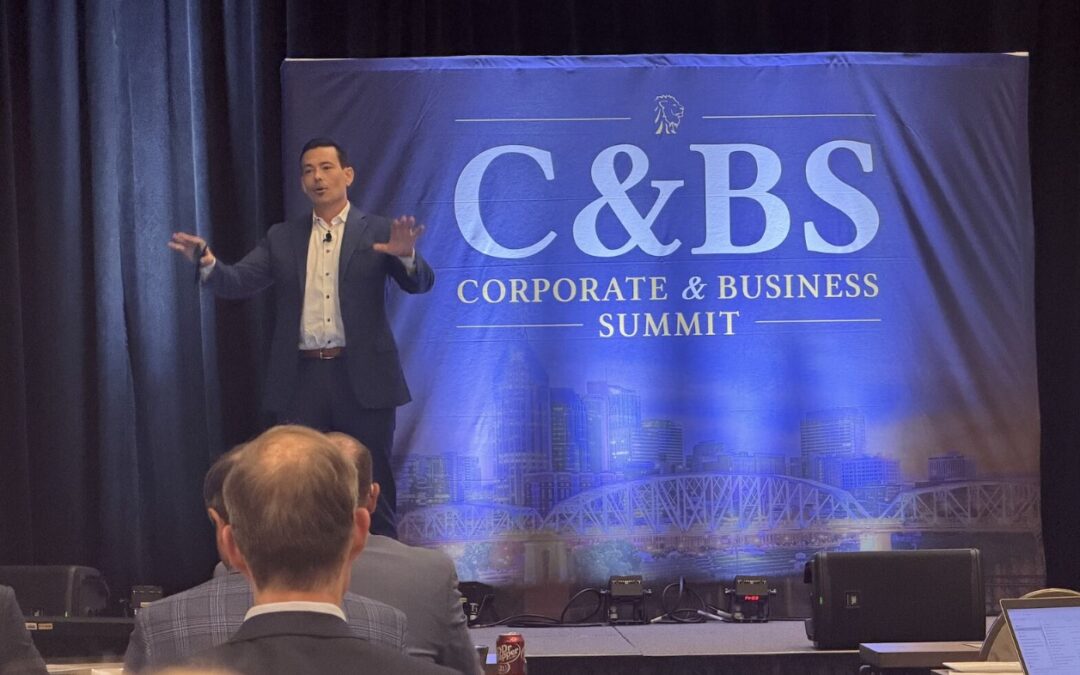
EVENTS · LION STREET CORPORATE & BUSINESS SOLUTIONS SUMMIT
Presenting at the Lion Street Corporate & Business Solutions Summit in Nashville: MSO Market Opportunities for Corporate Markets
Two days in Nashville for the Lion Street 2026 Corporate & Business Summit. GTC™ presented "MSO Market Opportunities & Case Studies" on the Monday agenda alongside the captive-insurance, cash-balance, buy-sell, and ICOLI/BOLI conversations the institutional corporate-markets community is having now.
By Mike Claudio, Co-Founder, Guardian Tax Consultants® · April 8, 2026 · 8 min read
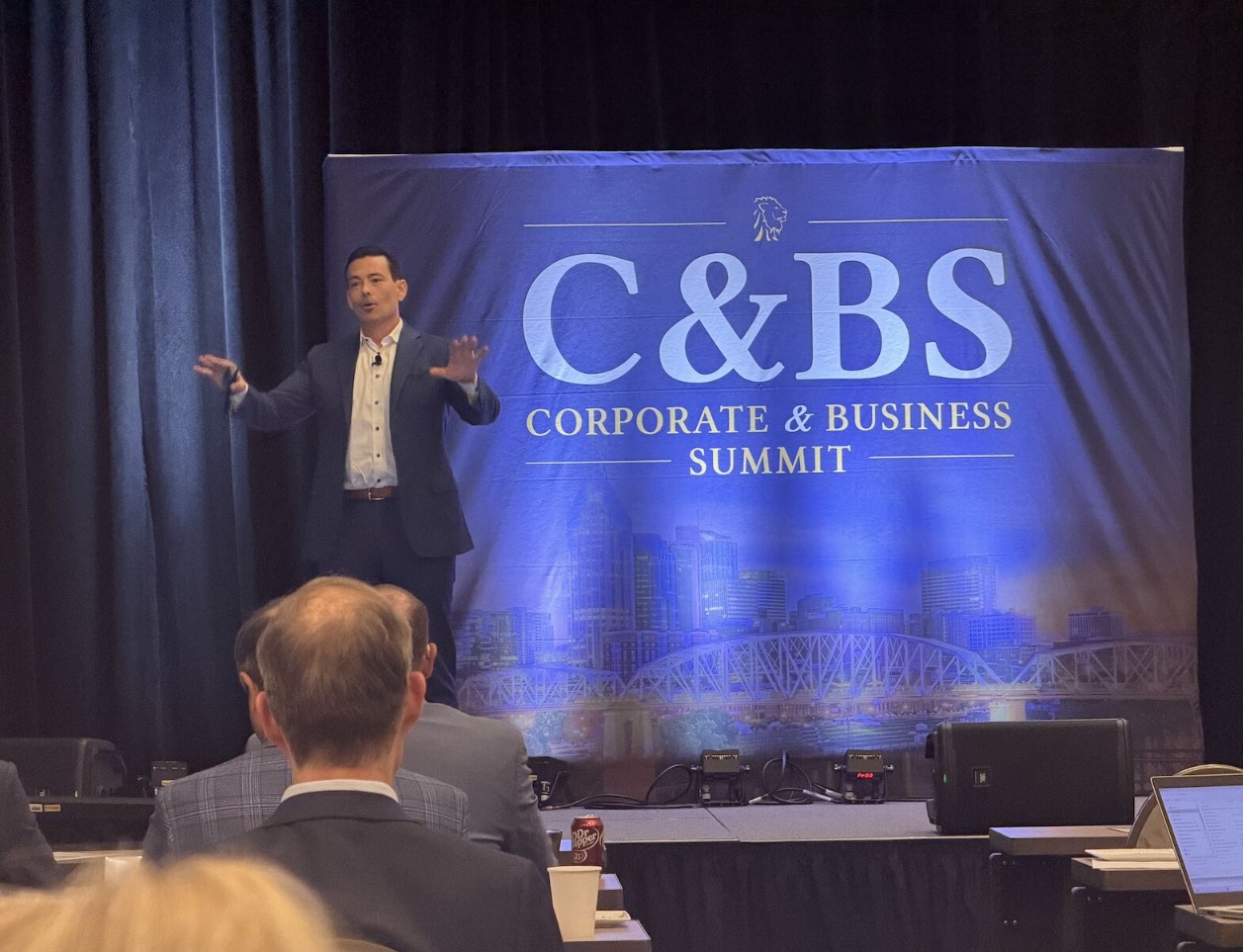
The Lion Street 2026 Corporate & Business Summit ran on Monday March 30 and Tuesday March 31, 2026 at the Hutton Hotel, 1808 West End Avenue, Nashville, Tennessee 37203. The summit is hosted by Matt Veatch, Vice President of Corporate & Business Solutions at Lion Street. Guardian Tax Consultants® presented "MSO Market Opportunities & Case Studies" on the Monday agenda. The GTC™ delegation included Alex Jones and Jake Valente, with the coordination work on the firm side led from Nashville. The notes that follow are an observational read from the seat of the presenting firm, not a transcript.
Why this room reads differently than the TAC or COLI rooms
The Lion Street Corporate & Business Solutions community sits a half-step removed from the closely held family-business and ultra-high-net-worth seat that the Trusted Advisors Conference convenes. The audience at the Corporate & Business Summit is the institutional corporate-markets practitioner — the producer, consultant, or carrier representative whose work runs through corporate balance sheets, nonqualified deferred-compensation plans, executive-benefits architecture, captive-insurance structures, and the buy-sell and key-person work that sits underneath the institutional client's risk and benefits posture. The two-day agenda reflects that altitude. The conversations are denser on entity architecture, accounting treatment, and regulatory cadence than they are on individual estate planning.
The Monday agenda
The Monday agenda opened with a disability-roundtable session featuring representatives from Lockton, TIP, and The Westport Group. Disability coverage in the corporate-markets context — group long-term disability, individual disability income for highly compensated executives, and the layered architecture that protects the institutional client's executive bench — is one of the categories where the corporate-markets producer has substantive design work to do for the institutional client. The roundtable format gave the producers in the room the cross-cutting view across three institutional broker and consulting platforms.
The cash-balance session was delivered by McHenry Advisers, whose practice sits at the actuarial and plan-design seat for qualified retirement plans that institutional and professional-services clients use to layer additional retirement contribution capacity above what a traditional defined-contribution plan allows. The cash-balance conversation in 2026 is one of the categories the corporate-markets community is asking more questions about, particularly when the institutional client is a professional-services partnership or a closely held business with concentrated senior compensation.
The buy-sell session was led by Michael Fontanini, MT, CFP®, TPCP®, AEP®, CLU®, Lion Street's Vice President of Advanced Sales & Design and Head of Advanced Planning. The buy-sell architecture in the corporate-markets seat is structurally different from the buy-sell architecture in the family-business seat — the institutional client typically has multiple shareholders, multiple classes of equity, and a more formal governance posture — and Michael's framing addressed how the corporate-markets producer should think about the funding mechanics and the policy architecture in that context.
GTC's "MSO Market Opportunities & Case Studies" session sat on the Monday agenda between the buy-sell session and the captive-insurance session that closed the day. The framing for the room was that the Management Services Organization is no longer an exotic architecture for the closely held business owner. It is a structure the corporate-markets producer should expect to encounter when the institutional client is a closely held professional-services firm, a private-equity portfolio company, or a family-controlled operating business with mature cash flow. The opportunities the GTC™ session walked through were the points at which the corporate-markets producer's existing work intersects with the MSO structure — nonqualified deferred-compensation funding inside the MSO, key-person and buy-sell architecture that touches the MSO entity, and the executive-benefits posture that the architecture creates room for.
The day closed with a captive-insurance session from CIC Services. The captive conversation is structurally adjacent to the MSO conversation — both involve a separate entity, a related-party premium or fee, and a contemporaneous documentation discipline — and the cross-cutting practitioner read on the two structures is that the regulatory posture has continued to tighten on the captive side while it has continued to professionalize on the MSO side. CIC Services' framing for the room reflected the current state of the literature.
The corporate-markets producer is already inside the MSO structure on the executive-benefits and buy-sell side. The question is whether the producer's seat is coordinated with the entity architecture or running parallel to it.
Frame · Lion Street Corporate & Business Summit · Nashville · March 30, 2026
The Tuesday agenda
The Tuesday morning agenda opened with Susan Wetzel, Partner at Haynes Boone, on executive compensation. Susan's seat at Haynes Boone is the legal-counsel seat the corporate-markets practitioner relies on for the design and documentation of nonqualified deferred-compensation arrangements, equity-compensation plans, and the broader executive-compensation architecture that sits at the intersection of Internal Revenue Code §409A and securities regulation. The session set the regulatory floor for the rest of the day.
The ICOLI/BOLI roundtable that followed brought together Institutional Architects, Mezrah Consulting, and Wrightwood Advisory — three of the consulting and architectural practices that the corporate-markets community relies on for institutional Corporate-Owned and Bank-Owned Life Insurance design. The roundtable conversation addressed how the institutional COLI/BOLI wrapper continues to evolve as a balance-sheet financing vehicle for executive-benefit obligations, with the relevant statutory framework at §101 for death-benefit treatment and the related regulatory and accounting posture continuing to stabilize.
Executive Benefit Solutions presented a non-profit split-dollar session targeted at the institutional non-profit client. Split-dollar life insurance arrangements in the non-profit and tax-exempt context have their own regulatory and documentation discipline, and the EBS session walked the practitioner audience through the current state of the architecture.
Map Benefits delivered the nonqualified deferred-compensation session, addressing the broader NQDC architecture the corporate-markets producer designs and supports for the institutional and closely held client. The session anchored the §409A discipline that sits underneath any properly designed NQDC plan and addressed the funding mechanics — including the relationship between the COLI policy that informally finances the obligation and the underlying liability the institutional client carries on the balance sheet.
The afternoon closed with a "What's Working" session from Institutional Architects and a "Business Planning Ideas for 2026" session from Executive Benefit Solutions — both forward-looking sessions framing the categories and architectures the corporate-markets community should be paying attention to for the coming year.
What the agenda tells you about where the corporate-markets practice is moving
After the summit, our team reviewed the published record on where the institutional corporate-markets practice currently sits. The NAIC's ongoing work on the regulatory treatment of institutional COLI and BOLI, paired with the SEC and DOL framework around executive-compensation disclosure and nonqualified deferred-compensation funding, reflects a category that is stable enough on the regulatory side that the practitioner conversation has moved on to architecture and integration. That observation is consistent with what the two-day agenda represented. The corporate-markets community is asking better questions than it once did about how the entity architecture — including the MSO — supports the executive-benefits and balance-sheet financing work that sits at the center of the producer's practice. That is the right direction for the category to be moving.
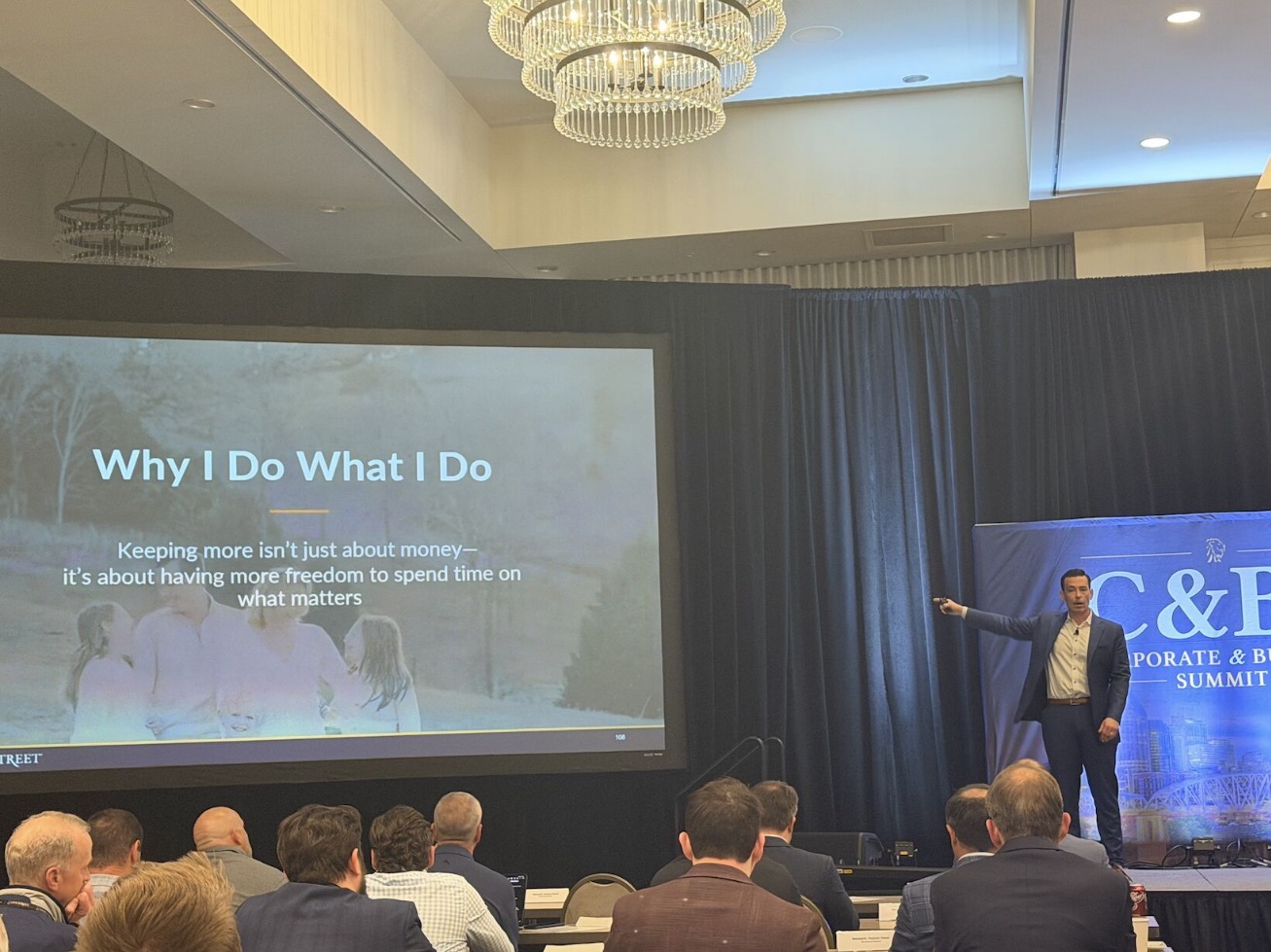
The talk: It’s not what you make. It’s what you keep.
The session title set the frame: It’s Not What You Make. It’s What You Keep — Helping Business Owners Keep More of What They Make—So They Can Do More of What Matters. The room was Lion Street’s corporate-markets practitioners; the brief was MSO market opportunities; the structure was the GTC™ platform — Feasibility → Strategy & Design → Implementation → Ongoing Support.
The real problem
Pass-through owners are taxed on profits whether distributed or not. Capital lost to tax is capital that cannot fund growth, planning, or transition. At sale, the next round of taxation reduces what owners ultimately keep. The MSO is one architectural response — not the only one, but a defensible one when the family fits the profile.
A better structure, in four architectural beats
- Management oversight — separating strategic governance from daily operations.
- Formalized services — documented exchange of value and a defensible fee methodology. See how MSO management fees are calculated.
- Asset protection — separating risky operations from valuable intangible and capital assets.
- Transitional services — continuity and value retention into the next chapter.
The illustrative numbers from the deck
The deck’s representative case: a $5M EBITDA operating company. During ownership, the structure illustrated approximately 25.4% more capital retained annually — $3.15M without an MSO compared with $3.95M with one — reflecting the spread between a 37% pass-through rate and the 21% corporate rate inside the MSO. At transition, the illustration showed roughly 43.4% more net proceeds, with $30.48M without the MSO versus $43.72M with it — including an $8M higher sale value tied to retained capital and $5.2M from tax efficiency, with shareholders qualified for §1202 QSBS. The figures are illustrative, not promises. See our note on managing double-tax exposure in C-corp MSO structures and on cash uses and §531.
MSO + insurance — same bank, same carrier, same product
The financing illustration: the MSO generates cash inside the structure, the cash supports interest, the structure supports collateral, less pressure rests on the owner personally, and the close rate moves up while the failure risk moves down. The finance partner referenced in the deck was Schechter. The framing — same bank, same carrier, same product, more cash value and more death benefit — mirrors what we wrote up in our premium-financed MSO case study. A representative case in the deck described an IUL policy financed and serviced through the MSO, exited in year six, with the bank repaid, the MSO repaid, $27.4M death benefit outside the estate, and $272K after-tax capital deployed.
Who the work is for
Privately held business owners, generally $5M+ net income, often $25M–$50M enterprise value, growing and profitable. The four-step process the deck described — feasibility (analyze structure and quantify tax exposure), strategy & design (custom build aligned with the family’s goals), implementation (legal agreements and operational setup), ongoing governance (compliance and quarterly services) — is the same four-step process behind every closely held engagement we run.
The personal beat behind the architecture
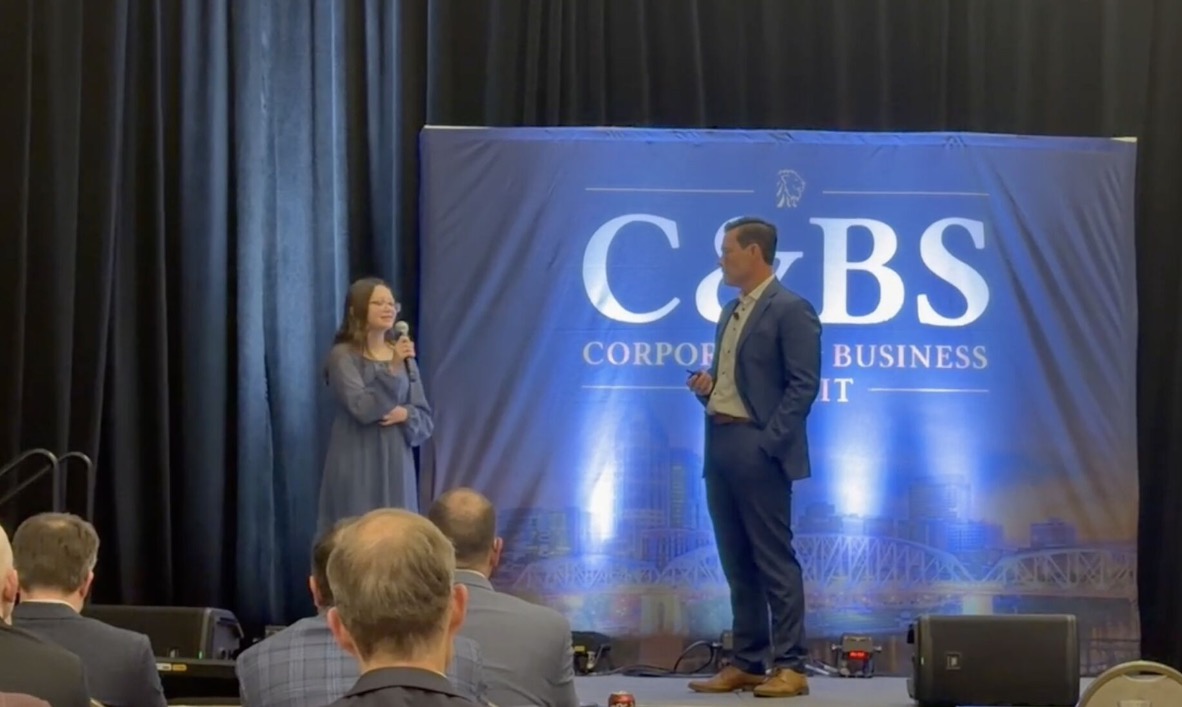
The talk opened with a short personal beat. At an RMA Festival appearance, Alex’s daughter Annabelle, then twelve, joined him on stage and sang “A Million Dreams” — a million dreams are keeping me awake / we can live in a world that we design. The point of putting it in front of the corporate-markets room was not sentimental. Keeping more of what owners make is, in the end, about the time and the choices it buys back — for the owners, for the next generation, for the people the work is for. The MSO is one piece of architecture in service of that.
Speakers and firms referenced
- Alex Jones, EA, CFP, ChFC, CLU, CEPA — Founder & CEO, Guardian Tax Consultants
- Matt Veatch — Lion Street
- Susan Wetzel — Haynes Boone
- Michael Fontanini — Lion Street
- Mezrah Consulting / mapbenefits — Plan administration & fintech
- CIC Services — Captive insurance
- McHenry Advisers — Executive benefits
- Lockton — Insurance brokerage
From our library
Closing observation
Two days in Nashville with the Lion Street Corporate & Business Solutions community is two days at a different altitude than the family-business or estate-planning seat. The room is the institutional corporate-markets practitioner. The architecture conversation runs through executive benefits, NQDC funding, captive insurance, ICOLI/BOLI, and the entity architecture that supports them. The MSO seat fits naturally into that conversation, and GTC's session on the Monday agenda was designed to make the integration points explicit for the producer audience. See the rest of our Insights library for the technical briefs underneath the architecture.
Working through a related fact pattern?
For platform partners — independent advisor networks, CPA firms, family offices, and PE platforms — seeking MSO education, CPE programming, or advisor-facing training, GTC™ develops co-branded education and on-site sessions.
Explore Co-Delivery Programming →