
EVENTS · 3RD ANNUAL BUSINESS EXCELLENCE SYMPOSIUM
Notes from the 3rd Annual Business Excellence Symposium in Greenville: ASE Private Wealth, Moore Colson, and the Owner-Built Enterprise-Value Conversation
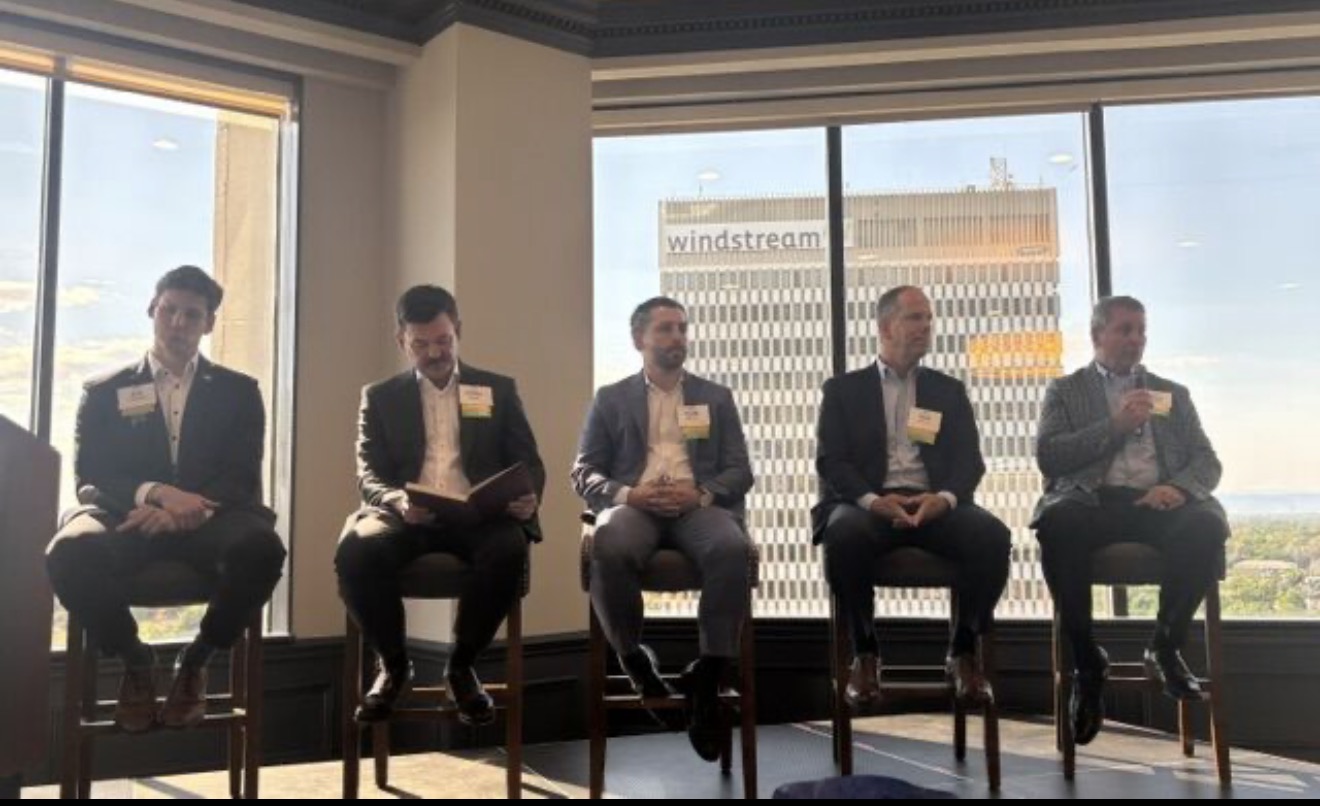
Two hours on the 17th floor of the City Club of Greenville with private business owners building with the end in mind. The host is ASE Private Wealth®. The agenda paired the transaction-advisory and exit-planning view with the entity-architecture seat the MSO occupies for closely held companies.
By Mike Claudio, Co-Founder, Guardian Tax Consultants® · April 14, 2026 · 8 min read
The 3rd Annual Business Excellence Symposium ran on Tuesday April 7, 2026, from 3:00 PM to 5:00 PM, with doors at 2:00 PM, seating at 2:45 PM, and a cocktail reception following from 5:00 to 6:00 PM. The venue was the City Club of Greenville on the 17th floor of One Liberty Square at 55 Beattie Place in downtown Greenville, South Carolina. The host firm is ASE Private Wealth®. The symposium's stated framing — "A Strategic Forum for Private Business Owners Building with the End in Mind" — sets the room's altitude correctly. The audience was closely held business owners, not advisors selling to them. The agenda and the presenter roster reflected that, and the substantive read from the room is what follows.
The host firm and the format
ASE Private Wealth® convenes the symposium annually. The host-firm leadership presenting included Devery "Rusty" Cagle, M.S., MPAS, CFP®, CRPC®, CAP®, CEPA®, Chairman, CEO, and Founder; Steven Fogerty, President; and Joe O'Shields, Chief Operating Officer, who developed ASE's AI Meeting Optimizer for client meeting workflow. The host-firm framing throughout the afternoon stayed at the architectural altitude the symposium's title implies. The room is private business owners who are not yet at the closing table but who want to build the enterprise with the closing table in view. That posture — not the imminent-transaction posture — is where most of the room lives, and it is the posture the agenda was designed to address.
The cocktail reception that closed the afternoon, paired with the Pendleton Place charity tie-in — The Cagle Family Foundation matches all proceeds for the Greenville nonprofit that serves youth and families — gave the room time to continue the conversations that the formal sessions opened. The symposium is consistently the strongest exit-planning room in the Upstate, and the format earns it.
The transaction-advisory seat: Chris Fagan, Moore Colson
Chris Fagan, CPA, Partner and Transaction Advisory Practice Leader at Moore Colson, presented the transaction-advisory view. Moore Colson's transaction practice sits in the seat the closely held business owner most often encounters first when an exit conversation moves from hypothetical to real — quality-of-earnings work, sell-side preparation, and the diligence posture the eventual buyer's team will bring. Chris's framing for the room was practical: the work the owner does on the operating company in the three to five years before a transaction is the work that defines the eventual outcome. The diligence posture is not something the owner can construct in the closing window. It is built years in advance through clean financial reporting, defensible governance, and a credible second-tier management team.
For the room of private business owners building with the end in mind, the framing earned its space on the agenda. The Moore Colson seat is the institutional reminder that the eventual transaction is not a single moment. It is the cumulative result of how the operating company has been run.
The capital-and-strategy seats: Tom Zucker, Edgepoint and Kyle Brown, First Trust
Tom Zucker, President of Edgepoint, presented the investment-banking and strategic-capital perspective on private business transitions. Edgepoint's middle-market M&A practice gives Tom the seat from which to address the capital-markets conditions the closely held owner is operating into — sponsor activity, strategic-buyer behavior, and the pricing dynamics that move year to year and quarter to quarter. The framing for the room was that capital-markets conditions are an input the owner cannot control; the architecture of the operating company is the variable the owner can.
Kyle Brown, CIMA®, Senior Vice President at First Trust, presented the asset-allocation and portfolio view that closely held business owners need to think through alongside the operating-company concentration risk. First Trust's framing in this room sits at the institutional-allocation altitude — not at the product-selection altitude — which is the right altitude for an audience whose largest holding is, by definition, the operating company itself.
The closely held business owner cannot control the capital-markets window. The owner can control the architecture of the operating company well in advance of it.
Frame · Business Excellence Symposium · Greenville · April 7, 2026
The MSO architecture seat: GTC's contribution to the agenda
GTC's contribution to the agenda was the entity-architecture seat — the seat the room less often hears in detail because most exit-planning conferences pair the transaction-advisory voice with the wealth-advisor voice and skip the entity-architecture conversation between them. Alex Jones, CEO of Guardian Tax Consultants®, was the GTC™ presenter on the agenda. The framing addressed the relationship between the Management Services Organization structure and the long-horizon enterprise-value conversation the symposium is built around.
The substantive points are the ones the practitioner audience already knows but the owner audience often does not. The MSO is a separate management company that provides real services to the operating business. The operating company pays a deductible management fee under Internal Revenue Code §162, with related-party pricing governed by §482 and the methodology detailed in Treasury Regulation §1.482-9. The personal-service-corporation reallocation authority sits at §269A. For the owner in the room building toward an eventual transaction, the structure creates an architectural seat the owner can use through the multi-year buildup, into the transaction window, and beyond it — including in the strategic exit-paths conversation that follows the transaction itself. The contemporaneous substantiation file behind the fee is what makes the structure defensible. Without it, the structure is exposure. With it, the structure is architecture.
After the symposium, our team reviewed the published record on closely held exit planning and entity architecture. The Exit Planning Institute's ongoing research on owner readiness consistently shows that the operating-company owner is most often unprepared for the transaction the owner is otherwise planning toward — not because the owner has not thought about the transaction, but because the architectural work that supports the transaction has not been built in time. That observation, when paired with the symposium's "building with the end in mind" frame, is the right way to position the MSO conversation in this room. The architecture is the work that has to be done well in advance.
Panelists and host firms
- Devery "Rusty" Cagle — ASE Private Wealth
- Steven Fogerty — ASE Private Wealth
- Joe O'Shields — ASE Private Wealth
- Chris Fagan, CPA — Moore Colson
- Tom Zucker — Edgepoint
- Kyle Brown, CIMA® — First Trust Portfolios
- Mike Claudio — Co-Founder, Guardian Tax Consultants
- Pendleton Place — Beneficiary — presentation by the ASE Preferred Partners Collective
From our library
Closing observation
The Business Excellence Symposium reads differently than most exit-planning conferences for a structural reason: the audience is the owner, not the advisor. The agenda the host firm built reflected that. The Moore Colson seat, the Edgepoint seat, the First Trust seat, and the GTC™ seat are not redundant. They are the four seats the closely held business owner needs to integrate before the transaction window arrives. ASE Private Wealth's role as host is to bring those seats into one room and let the owner do the integration work in real time. The format earns its third year. See the rest of our Insights library for the technical briefs underneath the architecture.
Working through a related fact pattern?
For platform partners — independent advisor networks, CPA firms, family offices, and PE platforms — seeking MSO education, CPE programming, or advisor-facing training, GTC™ develops co-branded education and on-site sessions.
Explore Co-Delivery Programming →